 listicle
Best Executive Coaching for Education Leaders
Table of Contents
- What Executive Coaching for Education Leaders Looks Like
- Quick Comparison: Executive Coaching Providers for Education
- Executive Coaching for School Leaders: Tailored to Your Role
- Leadership Coaching for Educators: Addressing Real Challenges
- Instructional Coaching for Schools: Beyond Classroom Support
- Education Leadership Development Programs: What to Look For
- How to Choose the Right Executive Coach for Your School
- Start with the outcome, not the coach
- Involve the right stakeholders, without compromising confidentiality
- Match the delivery mode to the leader and the school
- Decide between individual, team, and cohort coaching
- Assess the coach against education-specific criteria
- Check credentials, but weight experience appropriately
- Frequently Asked Questions
Last Updated: October 13, 2026
What Executive Coaching for Education Leaders Looks Like
Executive coaching for education has evolved beyond generic leadership seminars. A principal or headmaster gets targeted support for the specific pressures of running a school: staffing, budgets, parent relations, and instructional improvement.
The best executive coaching for education addresses real scenarios: helping a new principal establish authority without alienating experienced staff, guiding a headmaster through a difficult staffing decision, or equipping a director to shift school culture.
The most effective coaching combines one-on-one sessions with practical frameworks and scenario-based modules that let leaders work through real situations before they happen. Some prefer intensive in-person coaching; others prefer self-paced learning with check-ins. The delivery model matters less than the fit between the coach's expertise and the leader's challenges.
Quick Comparison: Executive Coaching Providers for Education
Most comparison tables for executive coaching mix corporate providers, coach-certification bodies, and education-specific services without distinguishing between them, making them useless for a principal, headmaster, or school business leader deciding where to invest.
| Provider | Delivery Model | Education Experience | Best For | Engagement Length | Indicative Cost |
|---|---|---|---|---|---|
| AAA Executive Leadership Services | Custom workshops + self-paced eLearning + one-on-one coaching | Specialist in school operations, timetabling, and education leadership | Schools needing tailored programs and operational expertise | Typically 3-12 months, modular | Quoted per engagement; modular pricing available |
| Executive Coaching Circles (HERS) | Coaching circles and peer advisory | Structured peer coaching model used by education leaders | Education leaders seeking peer support networks | Cohort-based, usually 6-12 months | Mid-range; cohort pricing |
| Marshall Goldsmith | One-on-one executive coaching | Corporate C-suite focus; limited school-specific experience | Senior leaders seeking behavioural transformation | 6-12 months | Premium one-on-one rates |
| Vistage | CEO peer advisory groups | General business peer advisory; some school business leaders participate | School business leaders and headmasters wanting peer advisory | Annual membership | Annual membership fee |
| Wharton Executive Education | In-person and online programmes | University-backed executive development; not education-specific | Leaders wanting a recognised university credential | Short courses to multi-month programmes | Premium programme fees |
How to read this table. The right column is not a ranking.
What the table does not capture. Pricing varies widely by engagement length, delivery mode, and whether the coach works with one leader or a cohort, and most providers quote per engagement rather than publishing rates.
Australian Institute for Teaching and School Leadership (AITSL) leadership profiles
A common pattern is to combine a specialist education coach for operational and instructional leadership with a generalist executive coach for senior behavioural development. That blended approach often delivers better value than committing the entire budget to one provider.
Executive Coaching for School Leaders: Tailored to Your Role
A headmaster's coaching needs differ from a deputy principal's or a curriculum director's. The best coaching builds programs around the specific role.
For headmasters and principals, coaching often focuses on strategic leadership, setting direction, managing boards, handling crises, and building high-performing teams.
For deputy principals and middle leaders, coaching addresses the tension between upward accountability and downward leadership, managing up while building credibility with staff. Scenario-based coaching works well here, letting leaders practise difficult conversations before they happen.
For school business leaders and directors, coaching often focuses on financial strategy, compliance, and operational efficiency, where timetabling expertise becomes critical.
AAA Executive Leadership Services offers custom coaching tailored to these roles.
Leadership Coaching for Educators: Addressing Real Challenges
Education leaders face challenges that don't appear in typical corporate coaching.
The best leadership coaching for educators builds solutions around these realities.
One common mistake is treating education leadership coaching as one-size-fits-all. A coach unfamiliar with schools might recommend practices that sound good in theory but ignore school budgets, union agreements, or managing 50+ staff with competing interests.
Peer coaching and coaching circles also work well for educators. When a principal sits with other headmasters facing similar challenges, learning accelerates, and peer advisory groups create accountability and offer solutions tested in similar contexts.
Instructional Coaching for Schools: Beyond Classroom Support
Instructional coaching traditionally focuses on classroom teaching, pedagogy, assessment, and student engagement. But instructional coaching for leadership targets the leaders who support teachers: principals, curriculum directors, and instructional leaders.
Leadership-focused instructional coaching addresses how a principal creates conditions for good teaching: building a culture where teachers feel supported, setting clear expectations for instruction, providing meaningful feedback, and allocating resources to support learning.
The distinction matters. Generic executive coaching might improve communication or strategic thinking; instructional coaching for leaders improves their ability to drive instructional improvement, the core work of a school.
Many schools combine both: one-on-one executive coaching for the principal on strategic leadership, paired with instructional coaching on improving teaching and learning. AAA Executive Leadership Services integrates both.
Education Leadership Development Programs: What to Look For
Look for scenario-based modules that let leaders work through challenging situations before they happen, building confidence and clarity.
Self-paced eLearning works when it's genuinely self-contained: a leader should complete a module in 30-45 minutes and apply the learning immediately. Video-based content often works better than text for busy leaders who learn while commuting or during lunch breaks.
Look also for ongoing support, not just a one-off workshop. A two-day conference might inspire but rarely creates lasting change.
AAA Executive Leadership Services builds programs this way: scenario-based MP4 modules leaders complete on their own schedule, custom workshops tailored to the school's priorities, and one-on-one coaching for leaders navigating specific challenges. The timetabling expertise is a differentiator.
How to Choose the Right Executive Coach for Your School
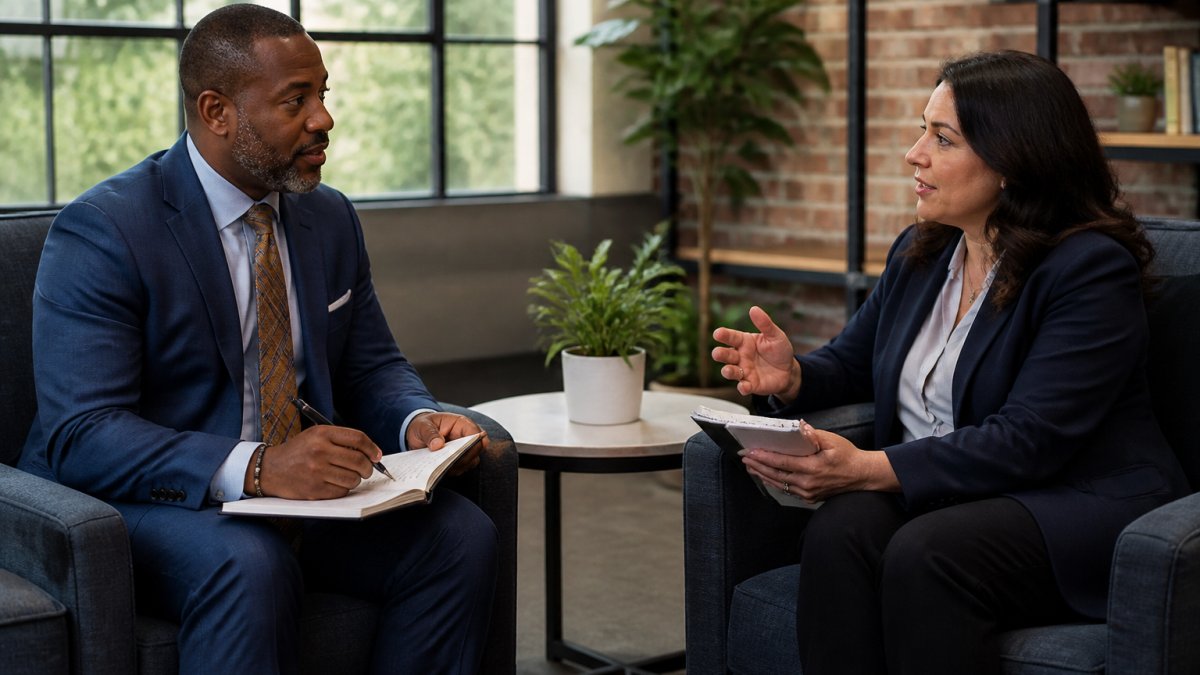
Choosing an executive coach for an education leader is a procurement decision as much as a leadership decision. Credentials and approach matter, but the practical questions, who is involved in the decision, how confidentiality is protected, which delivery mode fits your context, and whether you are buying individual, team, or cohort coaching, determine whether the engagement succeeds.
Start with the outcome, not the coach
Before shortlisting anyone, write down what success looks like in 6-12 months: a new principal confidently leading staff through a curriculum change, a deputy principal managing up more effectively, a school business leader rebuilding the timetable to reduce staff friction. Vague goals like 'improve leadership' produce vague coaching; specific goals let you assess whether a coach has delivered that outcome before.
Involve the right stakeholders, without compromising confidentiality
In a school context, the people who fund or sponsor coaching (the board, the executive, the business manager) are often not the people being coached. That creates tension: sponsors want evidence of progress, but the coaching relationship depends on confidentiality.
The workable pattern is a three-way agreement at the start: sponsor, coach, and leader agree on what will be shared (themes, attendance, high-level progress) and what will not (session content, specific disclosures). This protects the coaching relationship while giving the sponsor enough to justify the investment. Put it in writing before the first session.
Match the delivery mode to the leader and the school
Delivery mode affects cost, accessibility, and whether the coaching actually happens.
- In-person coaching suits intensive work, a new principal preparing for a restructure, or a leadership team working through a specific challenge. It requires travel or release time, adding cost and scheduling complexity.
- Online coaching suits geographically dispersed leaders, rural and remote principals, and busy executives who cannot commit to regular travel. It is usually cheaper and easier to sustain over a longer engagement. The trade-off is less informal connection and fewer opportunities for the coach to observe the leader in context.
- Hybrid coaching, in-person intensives plus online check-ins, is increasingly common, giving the depth of in-person work at key moments without the cost of weekly travel.
- Self-paced modules combined with live coaching suit leaders who need flexibility. The risk is content completed but not applied, so pair it with scheduled coaching conversations that anchor the learning to real situations.
Decide between individual, team, and cohort coaching
These are different products with different economics and outcomes.
- Individual coaching suits one leader navigating a specific challenge or transition. It is the most confidential and tailored, and usually the most expensive per person.
- Team coaching works when the leadership team itself must change, for example, a school executive not functioning as a coherent group. It is more efficient per person than individual coaching but requires the whole team to commit.
- Cohort coaching, leaders from different schools or roles moving through a program together, builds peer networks and cross-school learning. It is often the most cost-effective per leader, but less tailored to any one participant's context.
A common pattern is cohort coaching for emerging leaders and individual coaching for the principal or headmaster, allocating the most tailored (and expensive) support where impact is greatest.
Assess the coach against education-specific criteria
Ask every shortlisted coach the same questions and compare answers side by side:
- What experience do you have working with principals, headmasters, or school business leaders?
- Have you worked in government, independent, or Catholic systems, and how does that shape your approach?
- Can you describe a specific engagement with a school and what changed as a result?
- How do you handle confidentiality when the sponsor is also the leader's supervisor?
- What happens after the engagement ends, is there follow-up, and at what cost?
A coach who has worked only with corporate executives may still be excellent, but they will need to learn your context. Factor that learning curve into your decision.
Check credentials, but weight experience appropriately
Formal coaching credentials provide a baseline of training and ethical standards; deep education experience provides context no generic credential can substitute. The strongest candidates have both, but if you must choose, weigh recent, relevant education leadership experience heavily, a coach who has led a school through a restructure understands the constraints a certificate alone cannot convey.
Frequently Asked Questions
What does an executive coach help school leaders with?
Executive coaches for education leaders support strategic decision-making, team performance, behaviour change, and navigating organisational complexity. They work on leadership effectiveness, stakeholder alignment, staff engagement, and retention. Unlike instructional coaching focused on teaching methods, executive coaching addresses the broader leadership challenges principals and senior administrators face, including managing change, developing leadership capability across the team, and improving school culture.
How is executive coaching for education different from instructional coaching?
Executive coaching focuses on leadership capability, strategic priorities, and organisational performance for senior leaders and administrators. Instructional coaching supports teachers in improving classroom practice and student outcomes. Executive coaching for school leaders addresses board relations, budget strategy, staff development systems, and long-term school direction. Both are valuable, but they serve different roles and outcomes within a school.
What should a school look for in an executive coaching provider?
Look for providers with verified experience in education settings, understanding of school governance and complexity, and evidence of outcomes in similar institutions. Assess whether they offer flexible delivery (in-person, online, or hybrid), customised programs rather than templates, and scenario-based training relevant to education leadership. Ask about coach credentials, confidentiality practices, and how they measure leadership growth and team performance improvement.
Can executive coaching help improve leadership team performance?
Yes. Executive coaching addresses team dynamics, communication, decision-making, and alignment around strategic priorities. Providers often offer both individual coaching for senior leaders and team coaching to strengthen peer advisory, reduce silos, and build shared accountability. Combined with tailored workshops and professional development, coaching can measurably improve how leadership teams collaborate and execute school strategy.
How long does executive coaching usually take to show results?
Most coaching engagements span 3-12 months. Self-paced learning modules can accelerate adoption, while sustained results depend on consistent practice, organisational support, and follow-up. Schools should discuss engagement length and milestone expectations with their provider upfront.