 ultimate-guide
Leadership Development for Senior Staff: A 2026 Guide
Table of Contents
- Why Leadership Development for Senior Staff Matters
- Assessing Your Senior Team's Leadership Needs
- Building a Leadership Development Plan: Examples and Frameworks
- The 70-20-10 Leadership Development Model in Practice
- Executive Coaching for Senior Leaders: Building Capability
- Measuring Leadership Development Outcomes and ROI
- Common Program Failures and How to Prevent Them
- Frequently Asked Questions
Last Updated: October 6, 2026
Why Leadership Development for Senior Staff Matters
Leadership development for senior staff is no longer optional. Your most experienced leaders face pressures generic training cannot address: managing distributed teams, driving cultural transformation, deciding under uncertainty, and retaining high-potential talent.
The difference between organisations that invest in structured leadership development and those that don't shows up in team performance, retention, and succession readiness. When senior leaders lack clarity on their strengths or blind spots, those gaps cascade through the organisation; leaders with frameworks for influence and change management create higher-performing teams.
At AAA Executive Leadership Services, senior staff development isn't about motivational speeches or generic workshops. It's about building self-awareness, strategic thinking, influence across boundaries, and judgment through ambiguity. This guide covers assessing your team's needs, designing a plan that sticks, and measuring outcomes that matter.
Assessing Your Senior Team's Leadership Needs
Before designing any leadership development program, you need clarity on what your senior team actually needs to improve. Many organisations skip this step and jump straight to booking a workshop or coach, ending up with generic training that doesn't address real gaps.
Start by identifying the specific leadership challenges your organisation faces right now. Are you struggling with cross-functional collaboration? Is succession planning a gap? Are leaders making decisions too slowly or without enough input from their teams?
Conduct structured conversations with your senior team individually and in groups. Ask directly: Where do you feel least confident as a leader? What skills do you wish you had? What feedback stuck with you?
Consider the organisational context. If you're managing through restructuring, new technology, or market shifts, your senior leaders need capabilities around change leadership and stakeholder communication. If you're building a hybrid workforce, they need frameworks for leading teams they don't see daily.
Document these needs clearly. A simple needs assessment might look like: Strategic thinking (priority: high, 5 leaders affected), Executive presence and communication (priority: high, 4 leaders), Emotional intelligence and self-awareness (priority: medium, 6 leaders), Coaching and developing others (priority: high, 7 leaders).
Building a Leadership Development Plan: Examples and Frameworks
A sustainable leadership development plan combines multiple formats. No single workshop, however brilliant, creates lasting change in how senior leaders show up.
Your plan should include self-paced learning for flexibility, group workshops that build shared language and peer accountability, one-on-one coaching for personalised work, and real-world application where leaders practise new skills in their roles.
Consider this structure: begin with a baseline assessment, psychometric tools, 360-degree feedback, or structured interviews, so each leader understands their starting point.
Embed individual coaching alongside group work. A senior leader might attend a workshop on stakeholder influence, then work with a coach over six weeks to apply those frameworks to a specific challenge. This combination is where real behaviour change happens.
Build in peer learning forums where your senior team meets monthly to share learning, discuss real business challenges, and hold each other accountable. These often become the most valuable part of the program because they're grounded in actual work.
Finally, connect development to real projects. If you're developing strategic thinking, assign leaders a cross-functional strategy project; if building coaching capability, have them mentor a high-potential mid-level leader. Real-world application makes development stick.
| Development Format | Duration | Best For | Key Benefit |
|---|---|---|---|
| Self-paced eLearning modules | 4-8 weeks | Flexible schedules, foundational knowledge | Accessible, self-directed learning |
| Group workshops | 2-3 days | Building shared language, peer learning | Cohort accountability, shared frameworks |
| One-on-one coaching | 12-24 weeks | Personalised capability building | Tailored to individual challenges |
| Peer learning forums | Ongoing monthly | Peer accountability, real-world application | Sustained behaviour change |
| Project-based learning | 3-6 months | Strategic thinking, decision-making | Applied learning in context |
The 70-20-10 Leadership Development Model in Practice
The 70-20-10 model offers a practical framework: 70 per cent of learning comes from challenging experiences and real-world application, 20 per cent from relationships and peer feedback, and 10 per cent from formal training (The 70-20-10 Rule for Leadership Development).
Many organisations get this backwards. They invest heavily in the 10 per cent, expensive workshops and e-learning, and neglect the 70 and 20. The result is learning that doesn't translate into behaviour change.
In practice, here's how to apply 70-20-10 with your senior team:
The 70 per cent, challenging experiences and real-world application. Assign senior leaders stretch projects: leading a cross-functional initiative outside their domain, managing significant change, or taking a temporary role in another business unit. These build judgment, resilience, and strategic perspective no classroom can. The key is reflection: debrief afterwards on what they learned, what surprised them, and what they'd do differently.
The 20 per cent, relationships and peer feedback. Create structured peer learning groups where your senior team meets regularly to discuss challenges and give honest feedback. Pair senior leaders with high-potential mid-level leaders as mentors, and bring in external advisors or board members for perspective.
The 10 per cent, formal training and coaching. Use workshops, online modules, and one-on-one coaching strategically, targeted to gaps from your needs assessment. A two-day workshop on strategic decision-making makes sense if your team struggles with alignment on priorities; self-paced emotional intelligence modules work well before coaching.
The power of 70-20-10 is that it mirrors how adults actually learn: from doing hard things, reflecting, and getting feedback from people we trust. Formal training works best when it supports that process, not when it tries to replace it.
Executive Coaching for Senior Leaders: Building Capability
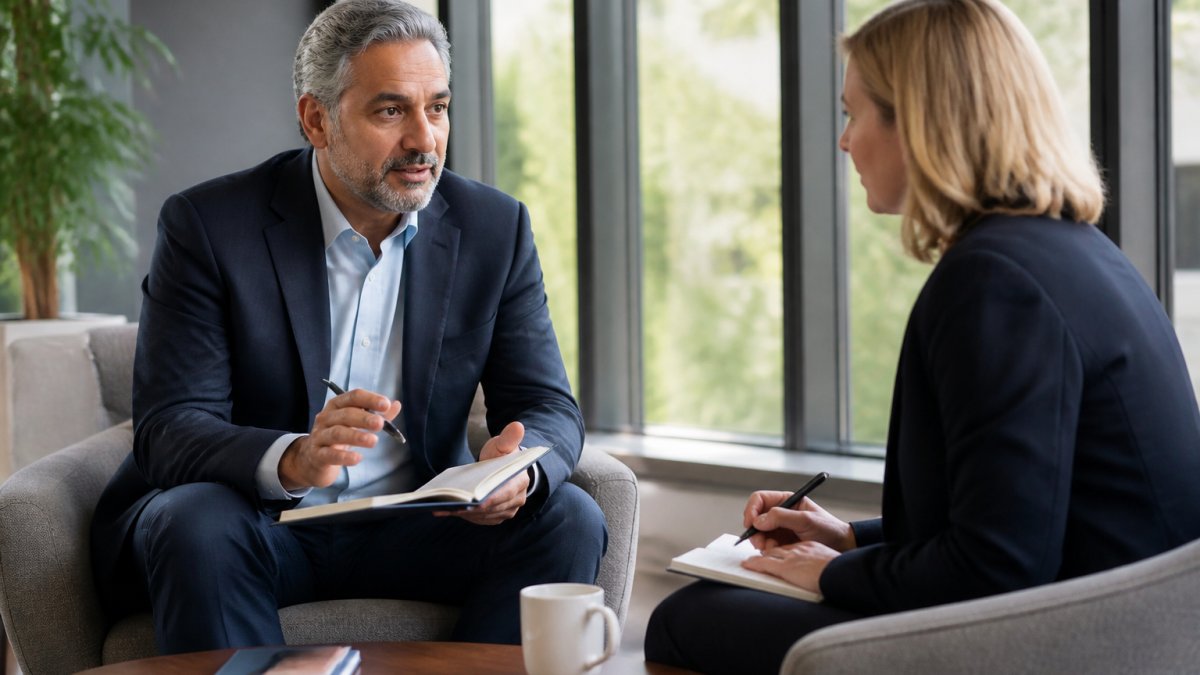
Executive coaching for senior leaders works differently than coaching at other levels. Your senior team faces unique pressures: they're often the final decision-maker on complex issues, have fewer peers to confide in, and their leadership style directly shapes culture.
Effective coaching at this level is highly personalised.
The coaching process typically starts with assessment. The coach gathers 360-degree feedback from direct reports, peers, and boss, creating a clear picture of how the leader is perceived and where gaps exist between self-perception and others' experience (360-Degree Feedback Is Powerful Leadership Development Tool).
From there, coaching focuses on specific, measurable outcomes. Not "become a better leader" but "improve team engagement scores by 15 per cent" or "lead the merger integration without losing key talent." Clarity on success keeps coaching focused and accountable.
A good coach creates psychological safety, a space where a senior leader can be honest about struggles and failures without fear of it being shared.
At AAA Executive Leadership Services, our coaching combines deep listening with practical frameworks. We work with senior leaders on real challenges, board dynamics, team performance, strategic decisions, not abstract concepts.
Measuring Leadership Development Outcomes and ROI
This is where many organisations stumble. They run a leadership development program, participants feel good about it, and nothing measurable changes. Your board asks about ROI, and you don't have a clear answer.
Define what success looks like before the program begins. Not vague goals like "improved leadership capability" but specific outcomes: Will team engagement scores improve? Will retention of high-potential staff increase? Will decision-making speed or strategic alignment improve?
Measure at multiple levels. First, reaction: Did participants find the program valuable? Easiest to measure, least informative. Second, learning: Did they acquire the intended knowledge and skills? Third, application: Are they using what they learned?
Fourth, and most important, organisational impact: Did the program drive outcomes that matter?
Measure before and after the program. Track team engagement before senior leaders start development, then again 6-12 months later. For retention, compare teams led by developed leaders versus other teams, this comparison gives you evidence of impact.
Some outcomes take time. A senior leader might improve self-awareness within weeks, but team engagement impact may take 3-6 months. Build measurement into your program design from the start: decide what you'll measure, when, and who owns it.
Common Program Failures and How to Prevent Them
Many leadership development programs fail not because the content is weak, but because of how they're designed and implemented. Understanding common failure patterns helps you avoid them.
Failure pattern 2: No senior leadership buy-in. HR designs the program; the CEO calls it a nice-to-have and doesn't participate. Senior leaders see it as a box to tick.
Failure pattern 3: Generic content that doesn't address real challenges. The program covers standard topics, emotional intelligence, communication, strategic thinking, but doesn't connect to your organisation's challenges.
Failure pattern 4: No measurement or accountability. The program runs, participants complete it, and no one measures whether anything changed.
Failure pattern 5: One-off event rather than sustained development. A single workshop is treated as "the" program, and participants expect transformation from a two-day event.
The strongest programs combine clarity of purpose, senior leadership commitment, real-world application, peer accountability, and measurement.
Leadership development for senior staff isn't a luxury. It's how you build the capability to navigate complexity, retain talent, and drive performance.
At AAA Executive Leadership Services, we specialise in tailored leadership development that addresses your specific organisational challenges.
Frequently Asked Questions
What is the 70-20-10 rule for leadership development?
The 70-20-10 model allocates development effort: 70% through challenging on-the-job experiences, 20% through relationships, coaching, and mentoring, and 10% through formal training. This framework recognises that senior leaders develop most effectively through real-world application, feedback from trusted colleagues, and targeted coaching rather than classroom training alone. It's particularly effective for senior staff because it embeds learning into daily work.
How can organisations measure the impact of leadership development?
Track measurable outcomes: team engagement scores, retention rates of high-potential employees, internal promotion success, project delivery timelines, and employee feedback on manager effectiveness. Conduct 360-degree feedback assessments before and after programs. Monitor organisational metrics like team performance ratings and cultural indicators. Set clear success metrics upfront, whether that's improved decision-making speed, stronger cross-functional collaboration, or reduced turnover, and review progress quarterly to demonstrate ROI to your board.
What skills should senior staff develop to become effective leaders?
Senior leaders need strategic thinking and business acumen to align teams with organisational direction. Self-awareness and emotional intelligence enable sound judgment and authentic influence. Communication and relationship-building skills are critical for navigating complex stakeholder environments. Decision-making capability, change management expertise, and the ability to coach and develop others distinguish high-performing senior leaders. Adaptability and resilience help leaders thrive in rapidly changing workplaces. Inclusive leadership practices ensure diverse talent is engaged and retained.
How do you create a leadership development programme for senior staff?
Start with a needs assessment: identify capability gaps through 360-degree feedback, interviews, and organisational strategy alignment. Design a blended program combining executive coaching, peer learning, scenario-based workshops, and self-paced learning modules. Tailor content to your sector, education, corporate, or non-profit contexts require different emphasis. Build in accountability through peer cohorts and regular check-ins. Ensure senior leaders see the program as relevant to their real challenges, not generic training. Pilot with a small group first if budget is constrained, then scale based on outcomes.
Can leadership development programs create lasting change, or do they fade after a few months?
Programs stick when they're embedded into the work environment and reinforced over time. One-off workshops rarely create lasting change. Effective programs combine initial training with ongoing coaching, peer accountability groups, and regular feedback cycles over 6-12 months. When senior leaders apply new skills immediately to real work challenges and receive coaching support, behaviour change is measurable. Organisations that build follow-up mechanisms, such as quarterly peer reviews or coaching check-ins, see sustained improvement in leadership effectiveness and team performance.
How does executive coaching support senior leaders differently than group training?
Executive coaching is personalised: a coach works one-on-one with a leader on their specific challenges, blind spots, and goals. Coaches help senior leaders build self-awareness through structured reflection and feedback, improve decision-making in complex situations, and develop authentic influence. Group training teaches frameworks; coaching helps leaders apply those frameworks to their unique context. For senior staff managing complex teams or navigating organisational change, coaching accelerates capability development and builds confidence. It's especially valuable for leaders who've plateaued or face new strategic responsibilities.
What's the actual cost of leadership development programs, and how do I justify it to my board?
Pricing depends on program scope, delivery format (self-paced, workshops, or coaching), duration, and team size. Rather than estimate, request a quote tailored to your needs. Justify investment by framing ROI: calculate the cost of leadership gaps (lost productivity, turnover, missed strategic opportunities) and compare it to program cost. Present measurable outcomes: improved team retention, faster promotion of internal talent, stronger project delivery, or improved engagement scores. A 12-month program that prevents the departure of one senior leader or accelerates succession planning typically pays for itself multiple times over.